Home · 2021 · Chevrolet
2021 Chevrolet Bolt EV
Buyable, but go in with open eyes: this car has specific known issues to check before money changes hands.
66 owner complaints · 5 recalls · data verified July 13, 2026 · source: NHTSA
Why caution?
Has a "park it / park outside" recall, the most serious kind. Verify the fix was done before buying.
5 recall campaigns (2 safety-critical). Confirm every one shows "remedy completed" on the seller's VIN.
Electrical system problems dominate (50% of complaints, typically reported near 6k miles).
The math, shown
Full methodology →Complaints filed per year
Fading = early teething worked out. Climbing = problems aging in.
How it crashes
NHTSA’s own crash tests, separate from the reliability score above.
5/5 overall
NHTSA 5-Star Safety Rating · 2021 Chevrolet Bolt EV 5 HB FWD
Rollover risk in a single-vehicle crash: 10%
1 open NHTSA defect investigation on file, separate from the recalls above.
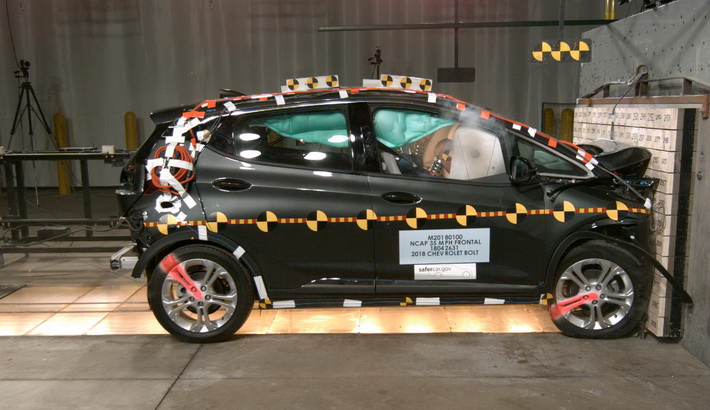
Source: nhtsa.gov/ratings. Star ratings compare vehicles within the same class and size, not across every car on the road.
The road ahead
What breaks on a 2021 Chevrolet Bolt EV, plotted where owners report it happening.
Also reported (mileage varies): Fuel system (15) · Transmission & drivetrain (10) · Steering (8)
Mileage medians come from owners who mentioned an odometer reading in their NHTSA complaint, a rough guide, not a schedule.
Electrical system
50%33 complaints · typically near 6k mi · 3 in the last 2 years
“12v battery warning light and ion Lucian battery light came on manufacture does not want to buy back and apple car play keeps breaking.”
Fuel system
23%15 complaints · 1 in the last 2 years
“My 2021 Chevy Bolt keeps showing a battery or power-Propulsion warning light related to the high-voltage system. The warning keeps coming back even after multiple repa…”
Transmission & drivetrain
15%10 complaints · 1 in the last 2 years
“Car stalled suddenly on road. Can’t change to any driving gear, only neutral. Towed to dealer, diagnose indicated wiring harness was the cause. Expensive fix for ~$400…”
Steering
12%8 complaints · 5 in the last 2 years
“Steering rack binding. Becoming progressively harder to turn over time. Steering wheel doesn't return to center. Clunking in front end occasionally heard when hitting …”
Recalls (5)
Safety recall repairs are free at the brand’s franchised dealers. Before buying, run the VIN at nhtsa.gov/recalls and make the seller show the work was done.
Park itElectrical System · 24V812000
General Motors, LLC (GM) is recalling certain 2020-2022 Chevrolet Bolt EV and 2022 Bolt EUV vehicles previously repaired under Recall 21V-650. The installation of advanced diagnostic software may have failed. As such, the high voltage battery could catch fire when charged to full or nearly full capacity.
Risk: A battery fire increases the risk of injury.
Fix: Owners are advised to take the following interim steps: Set the Target Charge Level feature in their vehicle to limit the charge level to 90%, charge their vehicle more frequently, avoid depleting the battery to 70 miles range remaining, park outside after charging, and do not charge the vehicle indoors overnight. Dealers will reinstall advanced diagnostic software, free of charge. Owner notification letters were mailed December 3, 2024. Owners may contact the Bolt EV Concierge Team at 1-833-382-4389. GM's number for this recall is N242470160.
Park itElectrical System · 24V481000
General Motors, LLC (GM) is recalling certain 2020-2022 Chevrolet Bolt EV and 2022 Chevrolet Bolt EUV vehicles that were previously remedied under recall number 21V-650. The advanced diagnostic software may have been incorrectly installed and fail to detect defective battery modules, possibly resulting in a battery fire.
Risk: A battery fire increases the risk of injury.
Fix: Owners are advised to take the following interim steps: Set the Target Charge Level feature in their vehicle to limit the charge level to 90%, charge their vehicle more frequently, avoid depleting the battery to 70 miles range remaining, park outside after charging, and do not charge the vehicle indoors overnight. Dealers will reinstall the advanced diagnostic software, free of charge. Owner notification letters were mailed on August 1, 2024. Owners may contact the Bolt EV Concierge Team at 1-833-382-4389. GM's numbers for this recall are N242443000 and N242443002.
Structure · 23V845000
General Motors, LLC (GM) is recalling certain 2017-2023 Chevrolet Bolt EV vehicles. This recall includes certain vehicles previously repaired incorrectly under NHTSA recall number 22V-930. After a crash with seat belt pretensioner deployment, the pretensioner exhaust may ignite carpet fibers near the B-pillar, causing a fire.
Risk: A fire increases the risk of injury.
Fix: Dealers will inspect both front seat belt pretensioners and, if necessary, install metal foil at the carpet near the pretensioner exhaust. Certain vehicles will also need a pretensioner cover installed. Repairs will be performed free of charge. Owner notification letters were mailed January 24, 2024. These vehicles were previously recalled for this same issue under recall number 22V-930 and will need to have the new remedy performed. Owners may contact GM EV Concierge at 1-833-EVCHEVY (1-833-382-4389) (TTY 711 / 1-800-833-2438) or Customer Service at 1-800-222-1020. GM's number for this recall is N232421970.
Structure · 22V930000
General Motors, LLC (GM) is recalling certain 2017-2023 Chevrolet Bolt EV vehicles. After a crash with seat belt pretensioner deployment, the pretensioner exhaust may ignite carpet fibers near the B-pillar, causing a fire.
Risk: A vehicle fire can increase the risk of injury.
Fix: Dealers will install metal foil at the carpet near the pretensioner exhaust, and install a pretensioner cover as necessary, free of charge. Owner notification letters were mailed between January 23, 2023 and April 25, 2023. Owners may contact Chevrolet customer service at 1-800-222-1020. GM's number for this recall is N222383790.
Park itElectrical System · 21V650000
General Motors, LLC (GM) is recalling certain 2020-2022 Chevrolet Bolt EV and 2022 Chevrolet Bolt EUV vehicles. The high voltage battery could catch fire when charged to full or nearly full capacity.
Risk: A battery fire increases the risk of injury.
Fix: Owners are advised to take the following interim steps: Set the Target Charge Level feature in their vehicle to limit the charge level to 90%, charge their vehicle more frequently, avoid depleting the battery to 70 miles range remaining, park outside after charging, and do not charge the vehicle indoors overnight. Defective battery modules will be replaced by GM, free of charge. Owner notification letters were mailed on October 1, 2021 and June 23, 2023. Owners may contact the Bolt EV Concierge Team at 1-833-382-4389. This recall is an expansion of NHTSA recall 21V-560. GM's number for this recall is N212345940.
Before you hand over money
Verify the recall work was done
NHTSA’s free lookup shows whether this exact car had its recall remedies completed.
Free NHTSA VIN check ↗Get a pre-purchase inspection
A $150 to $250 independent inspection of this exact 2021 Chevrolet BOLT EV beats every score on the internet, including ours.
What to ask forNot set on the 2021? See how every Bolt EV model year scores →
Cross-shopping? Compare the 2021 Chevrolet Bolt EV against another car →
What owners say
Real owners of this exact model-year, shown separately from the NHTSA score. If they disagree, that’s worth knowing.